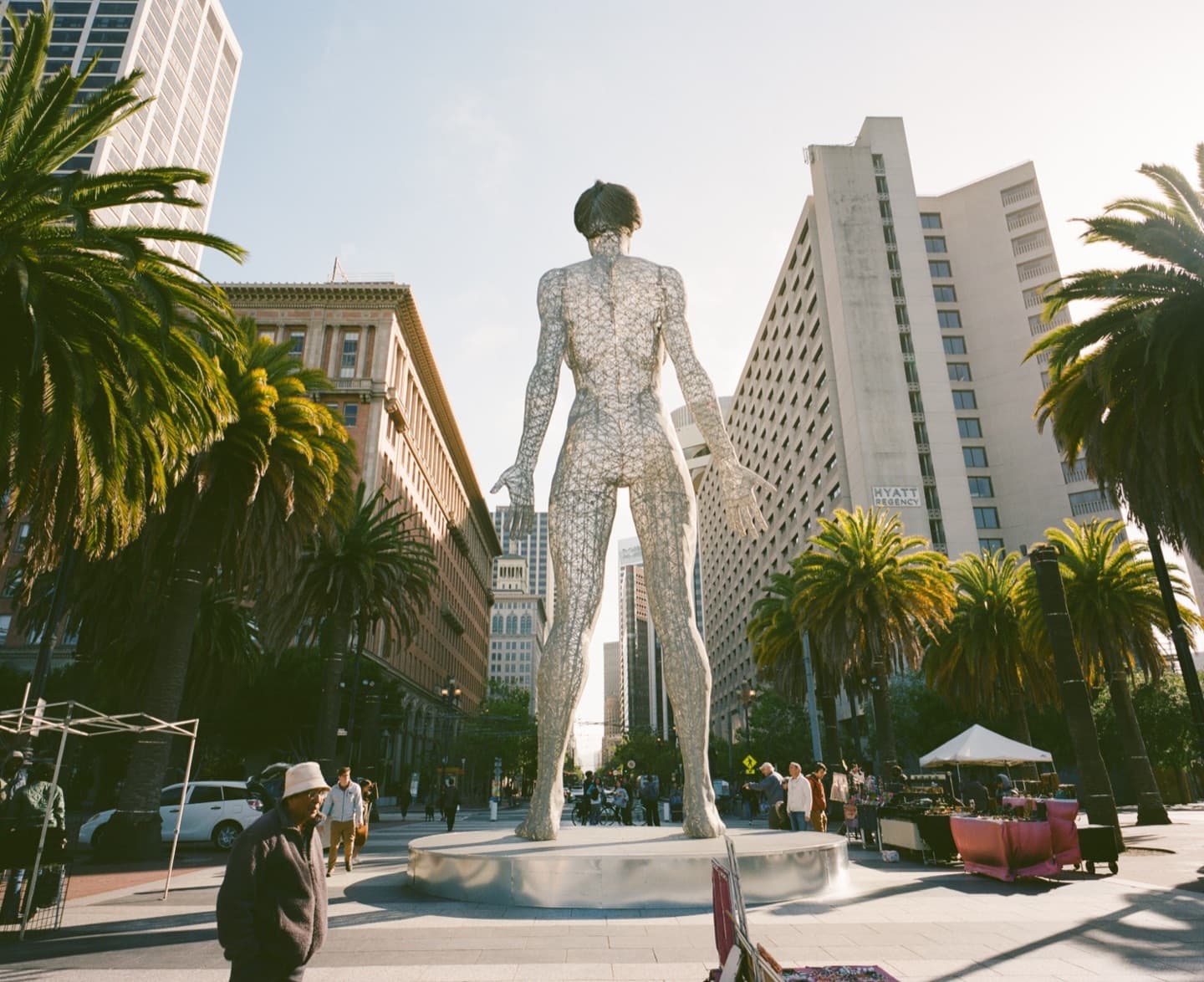
Kodak Portra 400 · 120mm · James Bogue
Whitepaper
The operating model. How a creative practice, amplified by machines, builds at a scale that shouldn't be possible.
v2.4.0 · June 13, 2026
The House of Bogue: Whitepaper
The Friction You Cannot See
Every business has friction. Not the friction you know about (the slow vendor, the missed deadline, the hire who didn't work out) but the friction underneath: the invisible drag that makes everything take longer than it should, cost more than it should, and feel harder than it should.
A fifteen-person company spends 40% of its energy on coordination. Email threads that go seven replies deep before someone makes a decision. Status meetings that exist because no one trusts the shared doc. Onboarding that takes three weeks because institutional knowledge lives in people's heads, not in systems. A new hire leaves after four months, and the founder thinks it was a bad fit. Maybe. Or maybe the friction made the role impossible, and neither side could see it.
This is the problem. Not that businesses lack tools. They have more tools than ever. The problem is that friction is structural, invisible to the people inside it, and misdiagnosed as something else: a people problem, a culture problem, a market problem. It is none of those things. It is an infrastructure problem. And infrastructure can be built.
But infrastructure alone is not the answer. The operating system described in this whitepaper does not solve friction. It surfaces friction. The humans inside the practice see what is surfaced, interpret it through their own institutional knowledge, and decide what to change. The human is the pattern recognizer, the assimilator, the decision maker. Without that, you have automation. With it, you have intelligence.
The House
At the center of The House of Bogue is a document called The House. It is the philosophical foundation that every decision in the practice traces back to. Not a brand guide. Not a mission statement. A living articulation of what the practice believes, written in language precise enough to propagate through machines.
The House opens with three words: Intellect. Judgment. Taste. The ability to see the pattern no one else sees. The discipline to know what to build and what to leave alone. The invisible standard that makes every touchpoint feel like someone gives a damn.
When The House changes, the change propagates through every surface it touches: the design system, the component contracts, the project documentation, the client work, this whitepaper. This is not maintenance. It is coherence enforced by infrastructure. The same principles, echoing through every layer of the system, all the way up and all the way down.
Everything documented here is in service of those three ideas. The machines handle execution. The human handles what machines cannot: seeing what others miss, knowing when not to act, and caring about the difference.
The World As It Is
In February 2026, Citrini and Alap Shah published "The 2028 Global Intelligence Crisis," a scenario analysis that modeled how AI collapses the intermediation layer of the economy. The report went viral across financial, creative, and technology communities.
The thesis: AI creates a negative feedback loop with no natural brake. Companies cut white-collar headcount, redirect savings into AI, AI improves, more cuts follow. Every business whose value proposition was "I will navigate complexity that you find tedious" gets disrupted when agents find nothing tedious.
What survives: Humans making decisions that machines cannot. Trust-based relationships that were never friction-based to begin with. The ability to see, to judge, to care.
What the crisis produces: A generation of skilled people leaving large organizations, carrying deep expertise, needing new ways to work. Not freelancers looking for gigs. Practitioners looking for infrastructure.
This is the environment The House of Bogue was built for. Not as a response to the crisis. As the architecture that was always coming.
Ring One: The Atom
An atom is one person, amplified by machines, who does the work of a department.
Not through overwork. Through leverage. The machines handle execution: email classification, calendar management, document rendering, relationship tracking, security auditing, content generation, cost tracking, knowledge search. The human handles what machines cannot: creative direction, strategic judgment, client relationships, and the taste that makes every output feel like someone gives a damn.
The House of Bogue is the first atom. One practitioner serves multiple clients simultaneously, builds websites, delivers strategic advisories, reviews contracts, audits security, manages relationships, and documents the entire process as it happens. All on the same infrastructure. All running now.
How It Works
Three roles. One system.
| Role | Who | Job |
|---|---|---|
| Strategist | The practitioner | Decides what to build, who to serve, when to act |
| Architect | AI at the terminal | Builds the machines: code, APIs, pipelines |
| Operator | AI on the messaging platform | Runs the machines: manages email, relationships, knowledge, daily operations |
The machines are a backend services triggered by cron schedules at zero AI cost. The operator is invoked only when intelligence is needed. The strategist steers from a messaging platform, the same interface used for everything else. No custom dashboard. No separate app. Everything runs through one interface. The messaging platform surfaces the operating system.
Every machine follows the same pattern:
Machine runs (scheduled, zero cost)
    ↓
Posts to messaging channel (formatted output + action buttons)
    ↓
Practitioner sees it, acts on it
    ↓
Handler executes the action
    ↓
Result posted back
Same pattern every time. Another machine is another channel and another configuration file. No new architecture for each capability.
The Machines Currently Running
- Email Monitor: Polls multiple accounts, classifies every message, routes to channels with action buttons. Conversational search across all accounts. Delete, unsubscribe, and block actions. Cross-posts client emails to the right channel automatically.
- Daily Digest: Scans every project document across the ecosystem, compiles a morning briefing with turning points, attention items, and a narrative summary.
- Document Library: Renders every ecosystem document as a branded PDF with tier-specific formatting, pushed to channels. SHA-256 change detection re-renders only what changed.
- Relationship Machine: Per-contact channels with pinned status cards, follow-up alerts, automated interaction logging from email and calendar. Prep briefs for upcoming conversations.
- Session Close: Five-domain audit (documentation, security, governance, channels, code hygiene). Persistent flags that carry forward until resolved. Weekly session logs rendered as PDF. Startup carryover so the next session picks up where the last one left.
- Cost Dashboard: Tracks every API cost across all paid services, daily and monthly breakdowns by provider and project, inline charts, monthly PDF ledger with full audit trail.
- Channel Harmonizer: Audits every channel against its type pattern, reports and fixes gaps
- Architect Queue: Routes research between the two AI layers with decision buttons
- Knowledge Search: Semantic and keyword hybrid search across multiple collections: project briefs, governance docs, contacts, conversations, client context, and more. Full document retrieval. The shared intelligence layer that both the architect and the operator draw from.
- Calendar Monitor: Unified view across multiple accounts, free/busy slots, daily schedule posts
- Memory Layer: Retains what was learned across sessions, recalls relevant context at startup, reflects on its own patterns over time. Prediction memory and calibration history live here. Startup recall prefers semantic a local search engine retrieval, falls back to local a local search engine search, and can read the immutable a local search engine index directly when backend code cannot open the database normally, keeping the memory substrate available during transient index/query errors.
- The Oracle (Predictive Analysis): Multi-agent prediction engine. Three intelligence layers: market validation, client funnel optimization, scope intelligence. Simulates populations responding to propositions, measures outcomes against predictions, and calibrates with each rotation. Local-first inference. The system that turns pattern recognition into foresight.
These machines monitor other machines. The audit catches patterns in code not yet written. The propagation protocol enforces philosophical coherence across the ecosystem. The session close carries unresolved issues forward until they are addressed. The memory layer ensures that what one session learns, the next session inherits. The Oracle closes the loop: it does not just observe what happened, it anticipates what will happen and generates the strategy to test against reality. The system maintains its own coherence as a byproduct of doing normal work.
What This Proves
The atom model is not a pitch. It is the current operating state. Multiple active clients served simultaneously. Every capability listed above is running in production. The process of building it is documented as it happens, not reconstructed after the fact.
The machines are replicable. The services are copyable. The human is not. Twenty years of accumulated signal across photography, design, and technology. A career of pattern recognition across disciplines. The machines surface what needs attention. The human decides what it means. Every adaptation of the OS, every new machine, every new capability, is born from a human seeing something that the system surfaced but could not interpret on its own. The OS grows as an outgrowth of the practitioner's own evolving understanding. It is not a product installed. It is a practice expressed.
Ring Two: Atoms Combine
Add a second atom. The machines are shared. The infrastructure is reusable. What changes is the collective point of view: each human brings a perspective that compounds with the others.
This is not theoretical. The practitioner behind The House of Bogue has operated this way for ten years: forming collaborative relationships with other creatives, two or three people sharing capabilities, serving clients that no individual could serve alone and that could never afford a department.
The model that worked informally for a decade now has infrastructure behind it. The machines are shared. The operator manages all of them. The governance (design system, security posture, documentation standards, the propagation protocol) ensures consistency without bureaucracy. Each atom owns their client relationships. The practice is a shared resource, not a hierarchy.
Why This Matters Now
The Citrini shakeout is producing the people who need Ring Two. Skilled practitioners leaving large organizations, carrying deep expertise, building their own practices. They don't need a co-working space. They need shared infrastructure: email automation, relationship tracking, content pipelines, knowledge search, security auditing. Built once. Configured per atom. Reused across the practice.
Two atoms supporting a small company is more resilient, more creative, and less expensive than that company trying to build a department. The clients get the depth of specialized expertise. The atoms get the leverage of shared machines. The friction of coordination disappears because the infrastructure handles it.
The Intelligence That Compounds
Every client engagement produces structural knowledge. Not proprietary client data, but patterns: the onboarding sequence that cuts time-to-value from three weeks to three days, the communication pattern that distinguishes a retained client from a churned one, the compliance architecture that makes audits a byproduct instead of a scramble.
The operating system metabolizes this experience, but only because a human saw the pattern and decided it mattered. Each insight folds back into the infrastructure: a better service module, a more resilient architecture pattern, a new machine that solves a problem encountered in the field. The machine did not decide to improve. The human saw what was surfaced, recognized a pattern from their own experience, and chose to embed it. The pattern is captured without exposing the specific client context that produced it. Intellectual property stays where it belongs. The structural knowledge compounds across the network.
Every atom that joins inherits everything the network has already learned. The fifth atom doesn't start where the first atom started. They start where the network is now.
Mutual Growth
The loop between human and machine is not one-directional. The machine does not simply serve the human. The human does not simply instruct the machine. They grow together, and neither side achieves what it achieves alone.
The machine grows through the human. Not through synthetic information, but through real action in the real world: real problems solved under real constraints, real relationships navigated with real stakes, real judgment applied by someone who carries institutional knowledge that no training corpus can replicate. The intelligence that matters is earned in the field, not in the lab.
The frontier laboratories are beginning to admit the same thing. A 2026 DeepMind paper on the path beyond human-level AI concedes that machines trained on human knowledge stay bounded by it, that a system cannot discover a genuinely new concept without an experiencing agent to ground it in the physical world, and that this could tie the growth of machine intelligence to the slow rate of real-world experiment rather than the fast rate of computation. The lab building the frontier named the wall. The atom is what stands on the other side of it: a human, in the world, generating the signal the machine cannot manufacture.
The human grows through the machine. The practitioner who would have missed a pattern in a hundred client emails sees it surfaced. The creative director who would have spent a week on infrastructure spends it on the work that only a human can do. The machine does not replace the human's capability. It reveals capability the human did not know they had, by removing the friction that kept it hidden.
This is not a philosophical abstraction. It is the observable dynamic of every engagement. The operating system that has been running for months is measurably better than the one that launched, not because someone shipped an update, but because every real interaction taught it something that synthetic information could not. And the practitioner running it is measurably more capable, not because they learned a new skill, but because the machines freed the attention that was always there, buried under coordination, administration, and invisible friction.
The implication for the network is foundational. A decentralized infrastructure where each atom is sovereign, but where the insights earned through real work flow upward into shared capability, creates a system where participation compounds value for everyone. The network does not extract from its participants. It grows because they grow. The more practitioners who bring real institutional knowledge to real problems, the smarter the infrastructure becomes for all of them. Not because data is harvested. Because proven patterns propagate.
Ring Three: The OS Inside Organizations
This is not a replacement story.
When the operating system is applied to an existing organization, nobody loses their job. The team becomes more capable. The friction between people disappears. The fifteen-person company that was spending 40% of its energy on coordination now spends that energy on the work that actually matters.
What the Practitioner Does
The practitioner embeds as a creative and strategic leader within the organization: creative director, design strategist, operational architect. Not a consultant who delivers a report and leaves. An embedded partner who configures the OS for the client's environment and steers it from inside.
The OS configures to the client's messaging platform, email, calendars, and workflows. Machines start running: email gets classified and routed, documents get rendered and surfaced, relationships get tracked, security gets audited, costs get monitored. The team sees their own operations clearly, many for the first time.
The Friction Made Visible
The deepest value is not automation. It is clarity.
The founder who thinks their retention problem is a hiring problem discovers it is a friction problem. The team that thinks they need more people discovers they need fewer handoffs. The manager who thinks their direct report isn't performing discovers that the tools are creating friction neither of them can see.
The operating system surfaces these patterns. Not through analytics dashboards or quarterly reviews. Through the daily act of running: the morning digest that shows what happened, the relationship tracker that shows what didn't, the audit that catches what drifted. The friction becomes visible.
But visibility is only the beginning. The system surfaces. The humans inside the organization see what is surfaced, filtered through their own knowledge of their own business, and decide what it means. That interpretation is something no machine can do, because it requires the institutional context that only the people who built the business carry. The OS adapts based on those decisions, evolving into something unique to that practice. Not a one-size-fits-all tool. An outgrowth of the specific humans who use it. Their decisions shape the system. The system surfaces better information. The loop compounds.
The Delivery Model
The practitioner steers the OS within the organization on a retainer basis. The machines run themselves. The judgment about what to build next, what to automate, what to leave human: that is the ongoing value. The retainer funds the evolution, not the maintenance.
If the engagement ends, the client keeps a running system. An AI layer maintains it within the parameters the practitioner defined. The machines keep executing. What stops is the evolution: the ongoing human judgment about what matters next. The system is still useful. It just stops getting smarter.
The practitioner takes the patterns learned from the engagement back to the operating system. Every embedded engagement teaches the OS what friction looks like in a new context. Those patterns become universal. They improve the infrastructure for every future engagement. The loop never stops.
The Echo
The same architecture operates at every scale. One person and their machines. A practice of atoms sharing infrastructure. An organization with the OS embedded inside it. The same principles, the same governance, the same philosophical foundation, echoing through every layer. This is not a metaphor. It is the literal architecture: the same code, the same machines, the same propagation protocol, configured for a different context.
The House says the echoes should always point to the same truth. They do.
The Intelligence Layer
The operating system is not a collection of tools. It is a system that knows what it knows, documents what it does, corrects itself when it drifts, and learns from its own output.
Knowledge
A semantic search engine indexes a growing corpus of documents across the entire ecosystem. Both AI layers share the same indexed knowledge. The operator uses it to answer questions and quote passages verbatim. The architect uses it to maintain context across sessions. The index re-synchronizes on every session close, so the knowledge base always reflects the current state of the practice.
Coherence
When the philosophical foundation changes, the change propagates through every surface it touches. An explicit 8-step protocol discovers the ecosystem, scans for stale echoes, applies zone rules (practice layer: update freely; client layer: flag for review), and runs a coherence test. The system stays aligned with its own principles as a byproduct of the protocol, not as an act of manual diligence.
Self-Monitoring
Every session that does meaningful work ends with a five-domain audit: documentation, security, file governance, channels, and code hygiene. Unresolved issues carry forward to the next session. Security scanning runs automatically: prompt injection detection, integrity hashing, dependency vulnerability scanning, file permission audits. The security posture is not opt-in. It is automatic.
Feedback
The design system governs downward: philosophy becomes tokens, tokens become components, components become pages. Design notes flow upward: decisions made during live work feed back into the governance layer. The loop closes. The system learns from its own output. When a client engagement produces reusable interaction patterns (scroll-driven reveals, brand floods, typographic animation), those patterns are extracted into the Design OS as named primitives with documented principles. Project archetypes (Dark Premium, Bold Minimal) accumulate as the practice builds: each new engagement either fits an existing archetype or seeds a new one. The next project in that category starts from a higher floor.
What This Means
The OS is self-documenting (every action produces a record), self-monitoring (every session is audited), self-correcting (stale echoes are caught, issues persist until resolved), and self-improving (implementation discoveries feed back into governance). Each of these systems was built before the full scope of what it would monitor was known. The architecture adapts because it was never rigid.
What Comes Next
Everything documented above is running. The practice is real. The clients are real. The machines are real.
What is also real: every embedded engagement teaches the operating system what friction looks like in a new context. Those patterns are accumulating. They are becoming universal. The intelligence that powers one practice is learning to power many.
The operating system you just read about is the prototype for something larger. Not enterprise software for the Fortune 500. They have their platforms. This is for everyone else: the businesses that actually constitute the backbone of the economy, the ones rebuilding it right now, one practice at a time.
That chapter is being written. The practice itself is writing it.
Process as Content
The process of building is itself a deliverable. Every project generates two outputs: the work product and a living record of how the work was made.
A document grows alongside the work, capturing decisions as they happen, reasoning while it is still fresh, turning points before they get smoothed into narrative. Not what was built, but what was tried, what was killed, and why the surviving version won.
The daily digest synthesizes the state of every project across the ecosystem. The weekly session log accumulates the practice's history. The turning points document consolidates the moments where understanding shifted. Every session maintains the record as a byproduct of doing normal work.
This serves three functions: content that writes itself (every project generates its own case study), knowledge capture (decisions made in month one are retrievable in month six), and a differentiator clients can feel (transparency and depth, not just deliverables).
Nothing is published without the practitioner's oversight and edit. What becomes public, what stays internal, what gets refined further: those are human decisions, every time. But the raw material is always accumulating. This whitepaper, the articles on the website, the graph that maps the operating system's capabilities: all of it was produced through the work, by the same system it describes, under the same editorial judgment that governs every client deliverable.
The Close
The same principles echo through every layer: one person and their machines, a practice of peers sharing infrastructure, an organization with the OS embedded inside it. The same architecture. The same governance. The same truth, all the way up and all the way down.
Machines are capable of everything except deciding what matters next. They can surface every pattern, route every email, audit every session, render every document. But the moment of recognition, when a human looks at what the system surfaced and says that is the thing that needs to change, is the moment that no machine can replicate. That decision is, and always will be, human. The operating system exists to protect the time and attention that decision requires.
References
The argument in this paper is the practice's own point of view. The external facts it is layered against are sourced here, so the reader can see where judgment ends and the record begins.
- Citrini and Alap Shah, "The 2028 Global Intelligence Crisis" (February 2026). citriniresearch.com
- Genewein et al., "From AGI to ASI" (Google DeepMind, 2026). arXiv:2606.12683
- "Agentic Software Engineering: Foundational Pillars and a Research Roadmap" (2025). arXiv:2509.06216
The market produces tools. The OS evaluates them. Each evaluation sharpens the self-understanding.
If this resonates, I'd like to hear from you. Get in touch